
Visit our other feeds!




De-Registered User's blog
Tropentag 2011 is just a month away...
Sun, 09/04/2011 - 16:45 — De-Registered User
With 1098 registered participants from 72 countries, Tropentag 2011 is just a month away. A team of Student Reporters will be present to document in real time this year's 513 accepted contributions (117 paper presentation and 396 posters). Get a glimpse to the hosting University of Bonn and the City of Bonn.
Meet the Speakers: Dr. Hans-Joachim Preuß
Wed, 07/13/2011 - 18:31 — De-Registered User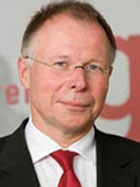 Hans-Joachim Preuß is the Managing Director of the Deutsche Gesellschaft für Internationale Zusammenarbeit (GIZ). He holds a PhD from
Justus Liebig University in Giessen, under the topic of target group-oriented agricultural research in developing countries.
Dr. Preuß started his professional career in development cooperation at the GTZ, holding various positions in Africa and at the GTZ Head Office in Eschborn, also as a member of the Corporate Development Unit. He was transferred at Welthungerhilfe in Bonn, where he was initially in charge of the Programmes and Projects Department and later Secretary General and Managing Director. In 2009, Dr Preuß was appointed Managing Director of GTZ.
Hans-Joachim Preuß is the Managing Director of the Deutsche Gesellschaft für Internationale Zusammenarbeit (GIZ). He holds a PhD from
Justus Liebig University in Giessen, under the topic of target group-oriented agricultural research in developing countries.
Dr. Preuß started his professional career in development cooperation at the GTZ, holding various positions in Africa and at the GTZ Head Office in Eschborn, also as a member of the Corporate Development Unit. He was transferred at Welthungerhilfe in Bonn, where he was initially in charge of the Programmes and Projects Department and later Secretary General and Managing Director. In 2009, Dr Preuß was appointed Managing Director of GTZ.
Meet the Speakers: Dr. Carla Roncoli
Tue, 07/05/2011 - 16:27 — De-Registered User Carla Roncoli is an economic-environmental anthropologist and member of the Center for Research on Environmental Decisions, Columbia University. She is currently Adjunct Faculty at Emory University and formely an Adjunct Professor in Anthropology at the University of Georgia.
She has worked with UNICEF in Nepal and Chad and consulted for numerous development organizations and International Agricultural Research Centers (IARCs). Dr. Roncoli’s research addresses the human dimension of climate change, with a particular focus on risk perceptions, communication, and management among African rural communities. It emphasizes the need for achieving a good “fit” between scientific information and technological innovations on the one hand and local knowledge, capabilities, and experience on the other hand.
Carla Roncoli is an economic-environmental anthropologist and member of the Center for Research on Environmental Decisions, Columbia University. She is currently Adjunct Faculty at Emory University and formely an Adjunct Professor in Anthropology at the University of Georgia.
She has worked with UNICEF in Nepal and Chad and consulted for numerous development organizations and International Agricultural Research Centers (IARCs). Dr. Roncoli’s research addresses the human dimension of climate change, with a particular focus on risk perceptions, communication, and management among African rural communities. It emphasizes the need for achieving a good “fit” between scientific information and technological innovations on the one hand and local knowledge, capabilities, and experience on the other hand.
Meet the Speakers: Prof. Paul Richards
Mon, 06/20/2011 - 10:28 — De-Registered User Paul Richards is currently Professor of Technology and Agrarian Development at Wageningen University, The Netherlands. He was a member of the Department of Anthropology at the University College of London (UCL) for 20 years from 1979 (Head of Department 1989-1992, Professor from 1992). While in UCL, he specialised in ecological anthropology, technology studies and West African ethnography.
His main fieldwork focus was on Sierra Leone, and included studies of Mende village rice farming systems and forest conservation on the Liberian border. He continued to work on and in Sierra Leone during the period of the civil war (1992-2002) and has written extensively on that conflict, and on the anthropology of modern armed conflicts more generally.
Paul Richards is currently Professor of Technology and Agrarian Development at Wageningen University, The Netherlands. He was a member of the Department of Anthropology at the University College of London (UCL) for 20 years from 1979 (Head of Department 1989-1992, Professor from 1992). While in UCL, he specialised in ecological anthropology, technology studies and West African ethnography.
His main fieldwork focus was on Sierra Leone, and included studies of Mende village rice farming systems and forest conservation on the Liberian border. He continued to work on and in Sierra Leone during the period of the civil war (1992-2002) and has written extensively on that conflict, and on the anthropology of modern armed conflicts more generally.
Meet the Speakers: Dr. Tewolde Berhan Gebre Egziabher
Sun, 06/12/2011 - 06:00 — De-Registered User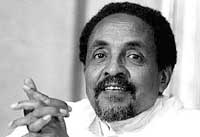 Dr. Tewolde Berhan Gebre Egziabher is Director General of the Ethiopian Environmental Protection Authority and Councillor at the World Future Council.
He received his PhD in 1969 and is Ethiopia’s first plant ecologist. Most of his working life has been in academia, and he has been the Dean of Science at Addis Ababa University and President of Asmara University.
He also served as Director of the Ethiopian Conservation Strategy Secretariat.
During the 1990s Dr. Egziabher put much of his energy into negotiations at the various biodiversity-related fora, especially the Convention on Biological Diversity (CBD) and the FAO. During this time, he built up a strong group of well-prepared African negotiators who began to take the lead in the G77 and China Group. Africa came out with united, progressive positions such as no patents on living materials and the recognition of community rights.
Dr. Tewolde Berhan Gebre Egziabher is Director General of the Ethiopian Environmental Protection Authority and Councillor at the World Future Council.
He received his PhD in 1969 and is Ethiopia’s first plant ecologist. Most of his working life has been in academia, and he has been the Dean of Science at Addis Ababa University and President of Asmara University.
He also served as Director of the Ethiopian Conservation Strategy Secretariat.
During the 1990s Dr. Egziabher put much of his energy into negotiations at the various biodiversity-related fora, especially the Convention on Biological Diversity (CBD) and the FAO. During this time, he built up a strong group of well-prepared African negotiators who began to take the lead in the G77 and China Group. Africa came out with united, progressive positions such as no patents on living materials and the recognition of community rights.
Meet the Speakers: Prof. Rattan Lal
Sat, 06/04/2011 - 10:07 — De-Registered User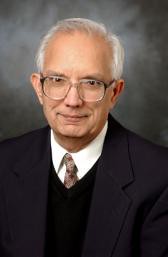 Rattan Lal is Professor of Soil Science in the School of Environment and Natural Resources at The Ohio State University.
From 1968 to 1969 he was Senior Research Fellow at the University of Sydney and soil scientist at the International Institute of Tropical Agriculture (IITA) in Ibadan, Nigeria from 1970 to 1987.
Rattan Lal is Professor of Soil Science in the School of Environment and Natural Resources at The Ohio State University.
From 1968 to 1969 he was Senior Research Fellow at the University of Sydney and soil scientist at the International Institute of Tropical Agriculture (IITA) in Ibadan, Nigeria from 1970 to 1987.
Meet the Speakers: Prof. Sir Gordon Conway
Sat, 05/28/2011 - 15:55 — De-Registered User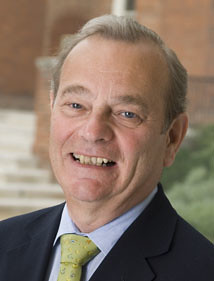 Prof. Sir Gordon Conway
Gordon Conway is Professor of International Development in the Centre for Environmental Policy of the Imperial College of London and holds five honorary degrees and fellowships. Trained in agricultural ecology, he attended the universities of Bangor, Cambridge, West Indies (Trinidad) and California (Davis).
In the 1960’s he was a pioneer of sustainable agriculture, developing integrated pest management programs for the State of Sabah in Malaysia. He joined Imperial College in 1970 setting up the Centre for Environmental Technology in 1976.
Prof. Sir Gordon Conway
Gordon Conway is Professor of International Development in the Centre for Environmental Policy of the Imperial College of London and holds five honorary degrees and fellowships. Trained in agricultural ecology, he attended the universities of Bangor, Cambridge, West Indies (Trinidad) and California (Davis).
In the 1960’s he was a pioneer of sustainable agriculture, developing integrated pest management programs for the State of Sabah in Malaysia. He joined Imperial College in 1970 setting up the Centre for Environmental Technology in 1976.
Tropentag extends abstract submission deadline
Sun, 05/15/2011 - 16:31 — De-Registered User
Tropentag organisers have extended the deadline for submission of abstracts until Monday, 30th May 2011.
If you are a researcher in the fields of resource management, environment, agriculture, forestry, fisheries, food, nutrition and related sciences, don't miss you chance to share results and insights with the world of development-oriented research.
Tropentag 2011 takes place in Bonn, Germany, with participants coming from almost 70 countries. Among others, keynote speakers include Gordon R. Conway (Imperial College London), Rattan Lal (Ohio State University), Paul Richards (Wageningen University), Tewolde Berhan (World Future Council), Hans J. Preuss (GIZ), Anthony Patt (IIASA), Christian Borgemeister (ICIPE), Ravinder Paul Singh Malik (IWMI), and Carla Roncoli (University of Georgia).
Short biographies of this year's keynote spekers coming up in this blog!

Pictures

Tweets
Recent blog posts
- Anything birds eat, human can eats!
- Policy briefs would simplify science: are policymakers and scientists ready?...
- The Most Sustainable Tropentag Ever
- Empowering the next generation of food security innovators
- Certified coffee, good for the planet?
- Hemp: grow it, not burn it!
- Biological and economical battle of legumes and cereals..
- Fearing Climate change? Farmers are the future…..
- Can Scientist have fun? Case study: #Tropentag2019 Conference Dinner
- “I’m sorry for your loss. May I check your pig?”
Who's online
There are currently 0 users and 0 guests online.